








Why South Africa Is Winning Africa’s Artificial Intelligence Race
South Africa is rapidly emerging as Africa’s leading artificial intelligence economy, driven by strong digital infrastructure, enterprise AI adoption, and government-backed innovation policies. From banking and mining to retail and automation, this article explores how AI is reshaping South Africa’s economy and why the rest of Africa risks falling behind in the global AI race.
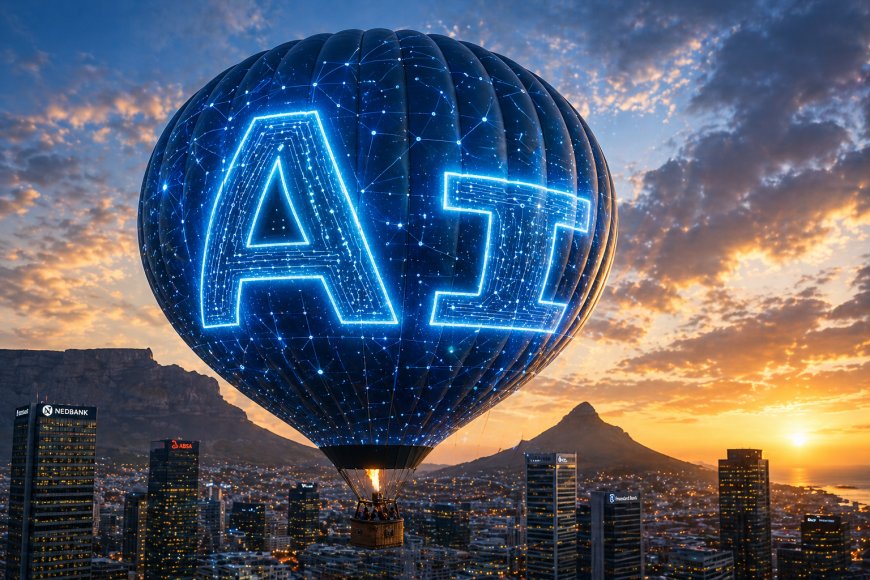
South Africa’s AI Boom Is Reshaping the Continent’s Digital Economy
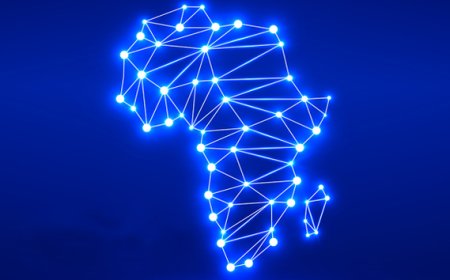
While many African economies are still struggling with basic digital transformation, South Africa is rapidly emerging as the continent’s artificial intelligence leader.
According to a recent Microsoft AI readiness report, South Africa leads Africa in AI adoption with a reported 21.1% adoption rate. The report attributes this growth to stronger digital infrastructure, expanding cloud ecosystems, and government-backed technology policies designed to accelerate innovation.
The momentum is becoming visible across the country’s economy.
Businesses are increasingly deploying AI systems to automate operations, analyze customer behavior, improve cybersecurity, and optimize financial services. What was once considered experimental technology is now becoming embedded into mainstream business operations.
For investors and policymakers, South Africa’s acceleration into AI may represent more than technological growth. It may signal the beginning of a wider economic power shift across Africa.
Banks, Retailers and Mining Companies Are Already Deploying AI Systems
Some of South Africa’s largest industries are already integrating artificial intelligence into core operations.
Standard Bank Group has expanded digital transformation initiatives using AI-powered systems for fraud detection, customer engagement, and transaction monitoring. Financial institutions are increasingly relying on machine learning to reduce operational risks and improve service efficiency.
Retailers are also aggressively investing in predictive analytics tools that monitor customer purchasing patterns and optimize inventory management.
Meanwhile, South Africa’s mining sector — one of the country’s most valuable industries — is undergoing a technological transformation driven by automation and AI-based predictive systems.
Mining firms are using artificial intelligence to monitor machinery performance and detect equipment failures before breakdowns occur, helping reduce operational losses and improve worker safety.
According to analysis from the World Economic Forum, AI adoption across emerging markets could significantly reshape productivity, logistics, and industrial competitiveness over the next decade.
South Africa’s early adoption gives it a potential strategic advantage as global industries increasingly move toward AI-driven operational systems.
Africa Risks Splitting Into AI Economies and Non-AI Economies
South Africa’s growing dominance in artificial intelligence is also exposing a widening digital gap across the continent.
Many African countries still face serious barriers to AI adoption, including weak internet infrastructure, limited computing capacity, low digital literacy, and underdeveloped regulatory frameworks.
As AI becomes increasingly integrated into finance, manufacturing, healthcare, logistics, and digital commerce, countries that fail to adapt may struggle to remain economically competitive.
The risks are not only technological — they are economic and social.
Artificial intelligence is expected to automate many repetitive administrative and operational tasks traditionally performed by entry-level workers. This could reshape labor markets across Africa at a time when youth unemployment remains critically high in several economies.
A recent analysis by McKinsey & Company warned that AI could significantly disrupt labor structures globally while simultaneously creating new productivity opportunities for economies that adapt quickly.
For Africa, the stakes may be even higher.
The continent’s future economic divide may no longer be determined solely by natural resources or industrial capacity — but by which countries successfully integrate artificial intelligence into their economic systems first.
South Africa appears to understand that reality already.
What's Your Reaction?
 Like
0
Like
0
 Dislike
0
Dislike
0
 Love
0
Love
0
 Funny
0
Funny
0
 Angry
0
Angry
0
 Sad
0
Sad
0
 Wow
0
Wow
0