











How the Strait of Hormuz Crisis Could Trigger Financial Shockwaves Across Global Markets
Rising tensions around the Strait of Hormuz are threatening global energy supplies, driving fuel prices higher and increasing risks across banking systems, financial markets, and global trade networks. This article explores how fuel inflation, shipping disruptions, and geopolitical instability could trigger economic shockwaves across both developed and emerging economies.
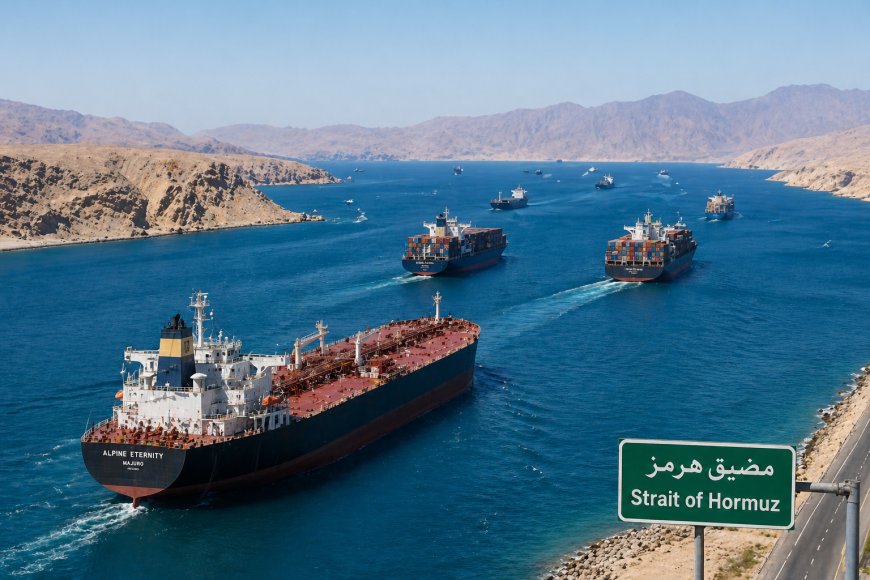
Rising Fuel Prices Are Becoming a Financial Threat, Not Just an Energy Problem
The growing instability surrounding the Strait of Hormuz is rapidly transforming from a geopolitical conflict into a major economic threat with potentially severe consequences for global financial systems.
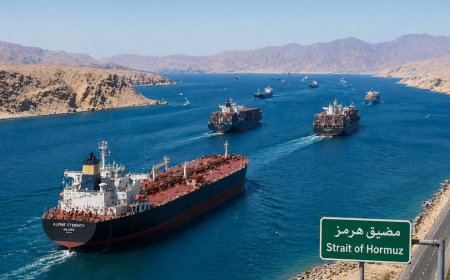
The strategic waterway — responsible for transporting a significant share of the world’s oil supply — has become a focal point of global concern following escalating tensions and fears of disruption to energy shipments.
For financial markets, the danger extends far beyond oil.
Any prolonged disruption in the Strait of Hormuz could sharply increase global fuel prices, intensify inflationary pressures, destabilize supply chains, and place enormous strain on banking systems, investment markets, and debt-heavy economies.
According to analysis from the International Energy Agency (IEA), disruptions in major oil transit routes historically trigger rapid price volatility across global energy markets, often spilling into broader economic instability.
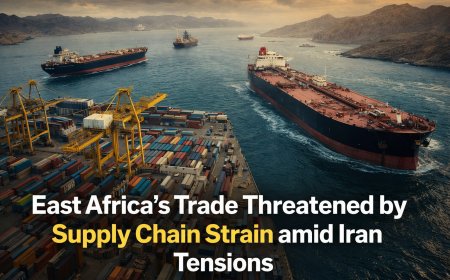
Already, rising fuel costs are beginning to pressure transportation sectors, manufacturing industries, and import-dependent economies across Africa, Europe, and Asia.
For many developing economies, this could become a dangerous financial chain reaction.
Banks and Businesses Face Mounting Pressure as Energy Costs Surge
Financial institutions are particularly vulnerable during periods of sustained fuel inflation.
Higher energy prices increase operational costs across nearly every sector of the economy. Businesses facing rising logistics and production expenses often experience shrinking profit margins, reduced expansion capacity, and growing debt risks.
For banks, this creates multiple layers of exposure.
Loan defaults could rise as businesses struggle with operational costs. Consumer spending may weaken as households redirect more income toward fuel and transportation expenses. Inflationary pressure may also force central banks to maintain higher interest rates for longer periods, increasing borrowing costs across economies.
The transportation and logistics sectors are already showing signs of vulnerability.
Airlines, shipping companies, and manufacturing firms heavily depend on stable fuel pricing structures. Sudden energy spikes can destabilize operational forecasting and disrupt global trade flows.
Following previous geopolitical disruptions in oil-producing regions, global shipping costs surged dramatically, contributing to wider inflationary shocks across international markets.
According to analysis from the World Bank, prolonged energy price spikes can significantly slow economic growth in import-dependent nations while increasing risks of financial instability and sovereign debt stress.
For African economies heavily reliant on imported fuel, the impact could be especially severe.
Countries already facing currency depreciation and inflationary pressure may experience further economic strain as fuel import bills rise.
The Strait of Hormuz Crisis Could Accelerate Global Economic Fragmentation
Beyond fuel prices, the deeper concern is what prolonged instability could mean for global trade systems themselves.
The modern global economy depends heavily on interconnected shipping networks and stable energy flows. Disruptions in critical trade routes such as the Strait of Hormuz expose how vulnerable international supply chains remain to geopolitical conflict.
Industries dependent on imported raw materials, industrial production, and international shipping could face worsening uncertainty if tensions escalate further.
This may accelerate a growing global trend toward economic fragmentation, where countries increasingly prioritize regional supply chains, localized manufacturing, and energy independence strategies.
Financial markets typically react aggressively to prolonged uncertainty.
Investors often shift capital toward safe-haven assets during geopolitical crises, while emerging markets face capital outflows and increased borrowing pressure.
A sustained disruption in the Strait of Hormuz could therefore create simultaneous pressure across:
- fuel markets
- banking systems
- inflation rates
- shipping industries
- currency stability
- investment markets
According to insights from the International Monetary Fund (IMF), geopolitical instability combined with inflationary shocks can significantly weaken global growth projections and increase financial system vulnerabilities.
For governments, banks, and businesses, the Strait of Hormuz crisis is becoming more than a regional conflict.
It is increasingly shaping into a test of how resilient the global financial system truly is in an era of rising geopolitical instability.
What's Your Reaction?
 Like
0
Like
0
 Dislike
0
Dislike
0
 Love
0
Love
0
 Funny
0
Funny
0
 Angry
0
Angry
0
 Sad
0
Sad
0
 Wow
0
Wow
0